
Programs

9/1/25

Overview

ICAPS 2025 Schedule at a Glance
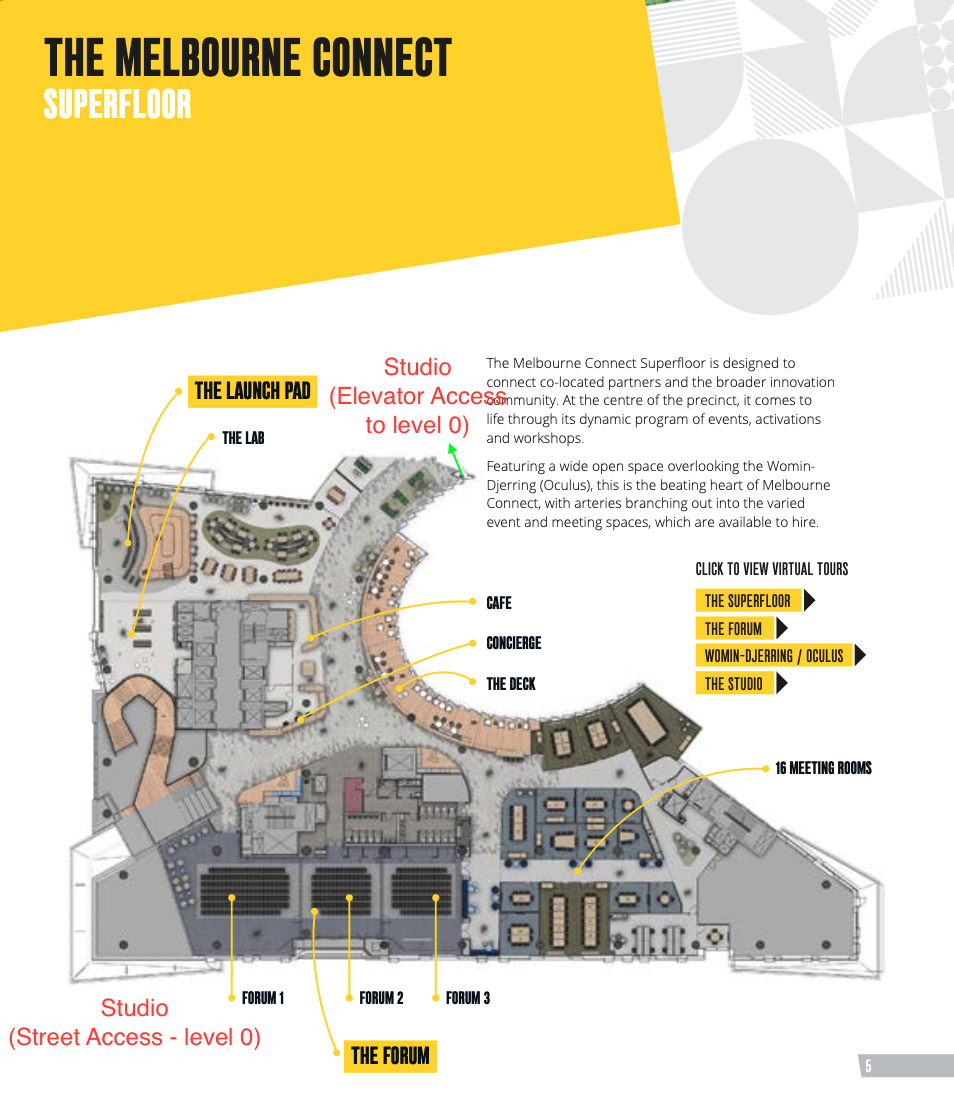
ICAPS Floor Map

Colocated Conferences

Additional Information about the Program

Special Events

  • Monday, November 10 @ 8am-12pm: OPTIMA Industry Workshop Smarter Decision-Making in Action: Planning and Scheduling for Road Transport Optimisation
  • Tuesday, November 11 @ 17:30 - 19:30: Opening Reception at RMIT alumni Courtyard
  • Wednesday, November 12 @ 17:00-18:00: Demo and Poster
  • Thursday, November 13 @ 18:00-22:00: Banquet at Ormond College, Walking distance from Conference Venue
  • Friday, November 14: Joint ICAPS & KR main track

Program at a Glance

Detailed Schedule →

Monday, November 10, 2025 - Workshops and Tutorials

TimeForum 1Forum 2LaunchpadStudioLevel 2 - Room 2508Meeting Room 1 & 2
7:30Registration Opens
8:30 - 10:00[W] PRL[W] OPTIMA[W] HPlan[W] PlanRob[W] HAXP
10:00 - 10:30Coffee Break
10:30 - 12:00[W] PRL[W] OPTIMA[W] HPlan[W] PlanRob[W] HAXP
12:00 - 13:30Lunch Break
13:30 - 15:00[W] PRL[T] LearnPlan[W] KEPS[W] PlanRob[T] MiniZinc[W] HAXP
15:00 - 15:30Coffee Break
15:30 - 17:00[W] PRL[T] LearnPlan[W] KEPS[T] MiniZinc[W] HAXP
Workshops [W]:
  • PRL - Bridging the Gap Between AI Planning and Reinforcement Learning
  • OPTIMA - Industry Workshop: Smarter Decision-Making in Action
  • HPlan - Hierarchical Planning
  • PlanRob - Planning and Robotics
  • HAXP - Human-Aware and Explainable Planning
  • KEPS - Knowledge Engineering for Planning and Scheduling
Tutorials [T]:

Tuesday, November 11, 2025 - Workshops and Tutorials

TimeForum 1Forum 2LaunchpadStudioMeeting Room 1 & 2KR Venue
7:30Registration Opens
8:30 - 10:00[W] LM4Plan[W] HSDIP[W] RIPL[T] PlanSAT/MLPlanSAT[T] LTLf[W] KRPlan
10:00 - 10:30Coffee Break
10:30 - 12:00[W] LM4Plan[W] HSDIP[W] RIPL[T] PlanSAT[T] MLPlanSAT[W] KRPlan
12:00 - 13:30Lunch Break
13:30 - 15:00[W] LM4Plan[W] CASP:ER[W] RIPL[T] BFS[T] Domain[W] KRPlan
15:00 - 15:30Coffee Break
15:30 - 17:00[W] LM4Plan[W] CASP:ER[T] BFS[T] EP[W] KRPlan
17:30 - 19:30Opening Reception at RMIT alumni Courtyard
Workshops [W]:
  • LM4Plan - Planning in the Era of LLMs
  • HSDIP - Heuristics and Search for Domain-Independent Planning
  • RIPL - Reliability In Planning and Learning
  • CASP:ER - Constraint And Satisfiability-based Planning: an Exploratory Research Workshop
  • KRPlan - Knowledge Representation Meets Automated Planning (located at KR venue)
Tutorials [T]:
  • PlanSAT - Planning as SAT (joint with MLPlanSAT in morning sessions)
  • MLPlanSAT - Integrating ML and Planning in SAT
  • LTLf - LTLf Synthesis
  • Domain - Modelling and Solving Combinatorial Problems
  • BFS - Suboptimal Best-First Search
  • EP - Epistemic Planning

Wednesday, November 12, 2025 - Main Conference Day 1

TimeForum 1Forum 2Forum 3 (CPAIOR)
7:30Registration Opens
8:40 - 9:00Opening Remarks
9:00 - 10:00Keynote: Hanna Kurniawati (Colocated with CPAIOR)
10:00 - 10:30Coffee Break
10:30 - 11:50Numeric and Temporal Planning I
4 papers
Classical Planning I
4 papers
CPAIOR Session
See CPAIOR Program
11:50 - 12:00Transition Time
12:00 - 13:30Lunch Break (1.5 hours)
13:30 - 14:50Alternative Formulations of Classical Planning
4 papers
Non-Deterministic Planning I
4 papers
CPAIOR Session
See CPAIOR Program
14:50 - 15:00Transition Time
15:00 - 15:30Coffee Break
15:30 - 16:50Machine Learning in Planning and Scheduling I
3 papers
Search in Planning and Scheduling I
3 papers
CPAIOR Session
See CPAIOR Program
16:50 - 18:00Demo and Poster Sessions

Thursday, November 13, 2025 - Main Conference Day 2

TimeForum 1Forum 2Forum 3 (CPAIOR)
9:00 - 10:00Keynote: Bistra Dilkina (Colocated with CPAIOR)
10:00 - 10:30Coffee Break
10:30 - 11:50LLMs in Planning and Scheduling I
4 papers
Numeric and Temporal Planning II
4 papers
CPAIOR Session
See CPAIOR Program
11:50 - 12:00Transition Time
12:00 - 13:30Lunch Break (1.5 hours)
13:30 - 14:50Numeric and Temporal Planning III
4 papers
Hierarchical Task Networks I & Non-Deterministic Planning II
4 papers
CPAIOR Session
See CPAIOR Program
14:50 - 15:00Transition Time
15:00 - 15:30Coffee Break
15:30 - 17:15Community Meeting & Awards
18:00-LateBanquet at Ormond College (Walking distance from Conference Venue)

Friday, November 14, 2025 - Main Conference Day 3 (Joint ICAPS & KR)

TimeForum 1Forum 2Forum 3 (KR)
9:30 - 10:30Keynote: Son Tran (Colocated with KR)
10:30 - 11:00Coffee Break
11:00 - 12:20Search in Planning and Scheduling II
4 papers
Machine Learning in Planning and Scheduling II
4 papers
KR Session
See KR Program
12:20 - 12:30Transition Time
12:30 - 13:30Lunch Jointly provided with KR (1 hours)
13:30 - 14:50Hierarchical Task Networks II
4 papers
Non-Deterministic Planning III
4 papers
KR Session
See KR Program
14:50 - 15:00Transition Time
15:00 - 15:30Coffee Break
15:30 - 16:30Classical Planning II
3 papers
LLMs in Automated Planning & Scheduling II
2 papers
KR Session
See KR Program
16:30 - 18:00Social Drinks

Note: Each paper presentation is allocated 20 minutes including Q&A. Detailed paper assignments and titles are available on the detailed schedule page.

6/26/25

Best-First Search without Node Re-openings

The Theory and Practice of suboptimal Best-First Search without Node Re-openings

ICAPS 2025 Tutorial

Suboptimal heuristic search has a long history dating to work by Pohl in the early 1970s. At the time, suboptimal search was not well-understood, but over time, this understanding has gradually been filled in, including work on understanding whether Weighted A* needs node-expansions, and the suboptimality bounds that result from using Weighted A*. This has also included work on focal-list algorithms, which generally require node re-expansions. One aspect of this work culminated in a 2021 paper by Chen and Sturtevant, which described the necessary and sufficient conditions for avoiding reopenings in best-first search. These conditions lead to new priority functions for best-first search which can significantly improve performance over Weighted A*, with only an approximately 1-line change to the source code. The goal of this tutorial is to provide attendees with a deep understanding of this work to foster further work on the topic.

6/24/25

Planning as SAT: What's new?

Planning as SAT: What’s new?

Despite the growing prevalence of heuristic search and learning-based approaches in automated planning, Satisfiability-based Planning (SAT-based planning) continues to represent a robust and promising paradigm. Indeed, SAT approaches have a long-standing tradition of strong theoretical foundations [1] and demonstrated success across various domains. This tutorial aims to re-establish the relevance of SAT-based planning by highlighting recent progress, examining emerging applications, and identifying pathways for future research and integration.

4/29/25

PlanRob

PlanRob: Planning and Robotics

Co-located workshop at ICAPS 2025
Melbourne, Australia
November 10, 2025 (Room: Studio)

Description

AI Planning & Scheduling (P&S) methods are key to enabling intelligent robots to perform autonomous, flexible, and interactive behaviours. Researchers in the P&S community have continued to develop approaches and produce planners, representations, as well as heuristics that robotics researchers can make use of. However, there remain numerous challenges complicating the uptake, use and successful integration of P&S technology in robotics, many of which have been addressed by robotics researchers with novel solutions. Strong collaboration and synergy between researchers in both communities is vital to the continued growth of the fields in a way that provide mutual benefits to the two communities. To foster this, the PlanRob workshop aims to provide a stable, long-term forum (having been held annually at ICAPS since 2013) where researchers from both the P&S and Robotics communities can openly discuss relevant issues, research and development progress, future directions and open challenges related to P&S when applied to Robotics. In addition to the usual paper submissions, the workshop’s format naturally lends itself to preliminary results, position papers as well as to work focused on challenges in using and integrating planners in robotics systems.

4/25/25

KRPlan

KRPlan: Knowledge Representation Meets Automated Planning

Joint workshop at KR 2025 and ICAPS 2025
Melbourne, Australia
November 11, 2025

Registration is possible through either ICAPS or KR (full or workshop registration).

KRPlan takes place in the Lyle Theatre (Room 101) of the Redmond Barry Building (Building 115), 17 Spencer Road, located a 5-minute walk from Melbourne Connect. The breaks are aligned with the other KR workshops, but we start slightly earlier.

Description

Traditionally, the areas of Knowledge Representation and Reasoning (KR) and Automated Planning are related via common connections to logical theories of acting and sensing, robotics, and temporal logics. However, the two research areas have developed in distinct directions, with the focus of KR research being more on theoretical results, such as the complexity of logical reasoning, while Automated Planning research has produced powerful heuristic search approaches that work on large problems from industry. There is substantial research interest in the connection between the two fields, with approaches ranging from temporal reasoning about actions and goals, answer set planning, ontology-based planning specifications, epistemic planning, to planning under open-world semantics.

4/21/25

HPlan

Eighth ICAPS Workshop on Hierarchical Planning (HPlan 2025)

Topics of interests include but are not limited to:

  • theoretical foundations, e.g., complexity results
  • heuristics, search, and other solving techniques for plan generation
  • techniques and foundations for providing modeling support
  • challenges and lessons learned from modeling systems (using hierarchical models)
  • applications of hierarchical planning
  • plan explanation for hierarchical models
  • hierarchical plan repair techniques
  • techniques for verifying solutions of hierarchical planning problems
  • techniques for automated learning and synthesis of hierarchical models
  • using Generative AI (like, e.g., LLMs) for hierarchical planning or modeling

Important Dates (updated!)

  • Submission Deadline: July 11 (Friday), 2025
  • Author Notification: August 15 (Friday), 2025
  • Camera-Ready Deadline: September 26 (Friday), 2025
  • ICAPS 2025 Workshops: Monday, November 10, 2025 (8:30 am - 12:00 pm)

Invited Talk

Roman Barták

From Validation to Correction: Towards Autonomous Agents Based on Hierarchical Planning

Hierarchical plan validation gets a sequence of actions and determines if it is a valid hierarchical plan, that is, it is executable and can be obtained by decomposing some task. If the plan is valid, then a proof in the form of the task decomposition structure can be released. However, if the plan is not valid, plan validators simply state this. This is where plan correction may help by suggesting modifications to invalid plans, such as inserting or deleting actions, to make them valid hierarchical plans. Although the original motivation for plan correction was to enhance plan validation, the concept proved to apply to various other problems, including plan recognition, plan repair, and even planning itself.

The talk illustrates a journey from plan validation to plan correction, advocating plan correction as a general concept that encompasses various hierarchical planning tasks. As a future research direction, it suggests that a similar approach can be applied to planning domain models to obtain truly autonomous planning agents capable of learning and maintaining models of own behavior.

4/19/25

KEPS

Knowledge Engineering for Planning and Scheduling (KEPS 2025)

2025 Workshop on Knowledge Engineering for Planning and Scheduling
Melbourne, Australia
November 10, 2025

Aim and Scope of the Workshop

Despite the progress in automated planning and scheduling systems, these systems still need to be fed by carefully engineered domain and problem descriptions and they need to be fine-tuned for particular domains and problems. Knowledge engineering for AI planning and scheduling deals with the acquisition, design, validation and maintenance of domain models, and the selection and optimization of appropriate machinery to work on them. These processes impact directly on the success of real-world planning and scheduling applications. The importance of knowledge engineering techniques is clearly demonstrated by a performance gap between domain-independent planners and planners exploiting domain-dependent knowledge.

4/14/25

HSDIP

Workshop on Heuristics and Search for Domain-independent Planning (HSDIP 2025)

ICAPS Workshop on Heuristics and Search for Domain-independent Planning (HSDIP 2025)
Melbourne, Australia
November 11, 2025

Schedule
Abstract SubmissionMay 16July 18, 2025
SubmissionMay 27July 25, 2025
Author FeedbackJune 23 - 27August 11 - 15, 2025
NotificationJuly 1August 19, 2025
Camera ReadyJuly 21September 3, 2025
All deadlines are AoE(UTC-12).

Aim and Scope of the Workshop

Heuristics and search algorithms are the two key components of heuristic search, one of the main approaches to many variations of domain-independent planning, including classical planning, temporal planning, planning under uncertainty and adversarial planning. This workshop seeks to understand the underlying principles of current heuristics and search methods, their limitations, ways for overcoming those limitations, as well as the synergy between heuristics and search.

4/13/25

Coming Soon

Attending the in-person 2025 OPTIMA workshop on Smart Logistics & Sustainable Transport: Industry Solutions for Smarter Decision-Making is essential for industry professionals and academics. This event provides a unique opportunity for networking, knowledge-sharing, and staying updated on the latest trends and technologies in transport and logistics.

Visit this external site for nore information.

4/13/25

Coming Soon

Bridging the Gap Between AI Planning and (Reinforcement) Learning (PRL)

ICAPS'25 Workshop

Melbourne, Victoria, Australia - Melbourne Connect - Room 1
Date: November 10, 2025
prl.theworkshop@gmail.com

Aim and Scope

While AI Planning and Reinforcement Learning communities focus on similar sequential decision-making problems, these communities remain somewhat unaware of each other on specific problems, techniques, methodologies, and evaluations.